
Clear speech can make or break an event. Whether you are running a corporate meeting, wedding toast, school presentation, worship service, or live performance, people need to hear the speaker clearly, with the squeal, the room and the background noise out of the way. That is where De-Feedback can make a major difference.
De-Feedback is an AI-powered live audio processing tool designed to help audio systems achieve more gain before feedback while also reducing room reverb and some background noise on vocal sources. In simple terms, it helps spoken word and vocals sound cleaner, more present, and easier to understand in challenging spaces.
What Is Audio Feedback?
Audio feedback is the high-pitched ringing or squealing that happens when sound from a loudspeaker re-enters a microphone, gets amplified again, and repeats in a loop. It shows up most in reverberant rooms, with microphones close to loudspeakers, and with presenters who hold the mic at their waist.
Audio engineers have always tamed feedback by "ringing out" the system with EQ. That process still matters, and done heavily it costs vocal quality and headroom. De-Feedback is designed to keep the mic stable with far fewer EQ bands spent on it.
How De-Feedback Helps in Real-World Events
The biggest advantage of De-Feedback is that it can help spoken word remain clear and intelligible in spaces that are normally difficult for microphones. That includes large wedding venues, gymnasiums, ballrooms, churches, school auditoriums, and outdoor events with challenging speaker placement. The official product guidance says it works for both small and large venues, indoors and outdoors.
This can be especially useful when:
- a speaker holds the microphone too low,
- the venue is overly reverberant,
- you need more vocal level before feedback,
- lavalier or handheld microphones must stay natural-sounding,
- or speech clarity is more important than raw volume.
What De-Feedback Sounds Like at an Outdoor Ceremony
Rig 2 lapel microphones on De-Feedback · 2 EV ZLX speakers · condenser over the string quartet
Sound on. A downtown Dallas garden, open air on every side, recorded on a phone from the guest chairs. This is what the rows hear: the officiant and the vows at conversation level, the quartet underneath, and the microphones open the whole time with De-Feedback doing its work.
Outdoors is the hard case. The speakers get help from nothing, every microphone is open to the whole garden, and this is where the extra gain before feedback pays for itself. The same rig handled a ceremony where a plane crossed the vows, and the recording is the one the couple kept.
Better Speech Intelligibility, With the Tone Intact
One reason De-Feedback stands out is that it is designed to reduce feedback and to clean up some of the room sound and background noise that make speech harder to understand. The result can be a voice that feels more direct and focused, which is especially valuable for wedding toasts, corporate presenters, officiants, and emcees.
According to the product FAQ, the plugin is calibrated best for singular human speech vocals and singing. That makes it a strong fit for events where clear vocal communication matters more than anything else.
De-Feedback Works on Top of Good Audio Engineering
Good system design still does most of the work.
A quality microphone, proper speaker placement, correct gain structure, and smart EQ are still important parts of a professional live sound setup. De-Feedback is best viewed as a powerful tool that supports an already well-designed system. The manufacturer is clear that proper EQ still has a place in extreme situations, and so are we.
In other words, the best results usually come from combining strong audio engineering practices with smart processing tools.
Does De-Feedback Add Latency?
The product documentation says the plugin itself runs at zero added latency, and that the meaningful latency comes from the computer and audio interface path rather than from the plugin itself. For live event work, that is important because excessive latency can make a system feel unnatural for both presenters and performers.
Where De-Feedback Can Make the Biggest Impact
At Dallas Event Audio, this type of processing fits events where vocal clarity is the priority. That may include:
Weddings
Wedding ceremonies and toasts often happen in reflective rooms where speech can get muddy fast. De-Feedback keeps officiants, vows, and speeches intelligible, even when the mic is held at the waist. Every wireless microphone on our microphone rentals carries it as standard.
Corporate events
In meetings, presentations, and conferences, people need to understand every word. Cleaner speech makes the event feel more polished and more professional. Every microphone we send to a corporate event runs through De-Feedback, so the podium, the lapel and the audience handheld sit at the same clean level, and the live stream feed carries the same processed speech the room hears.
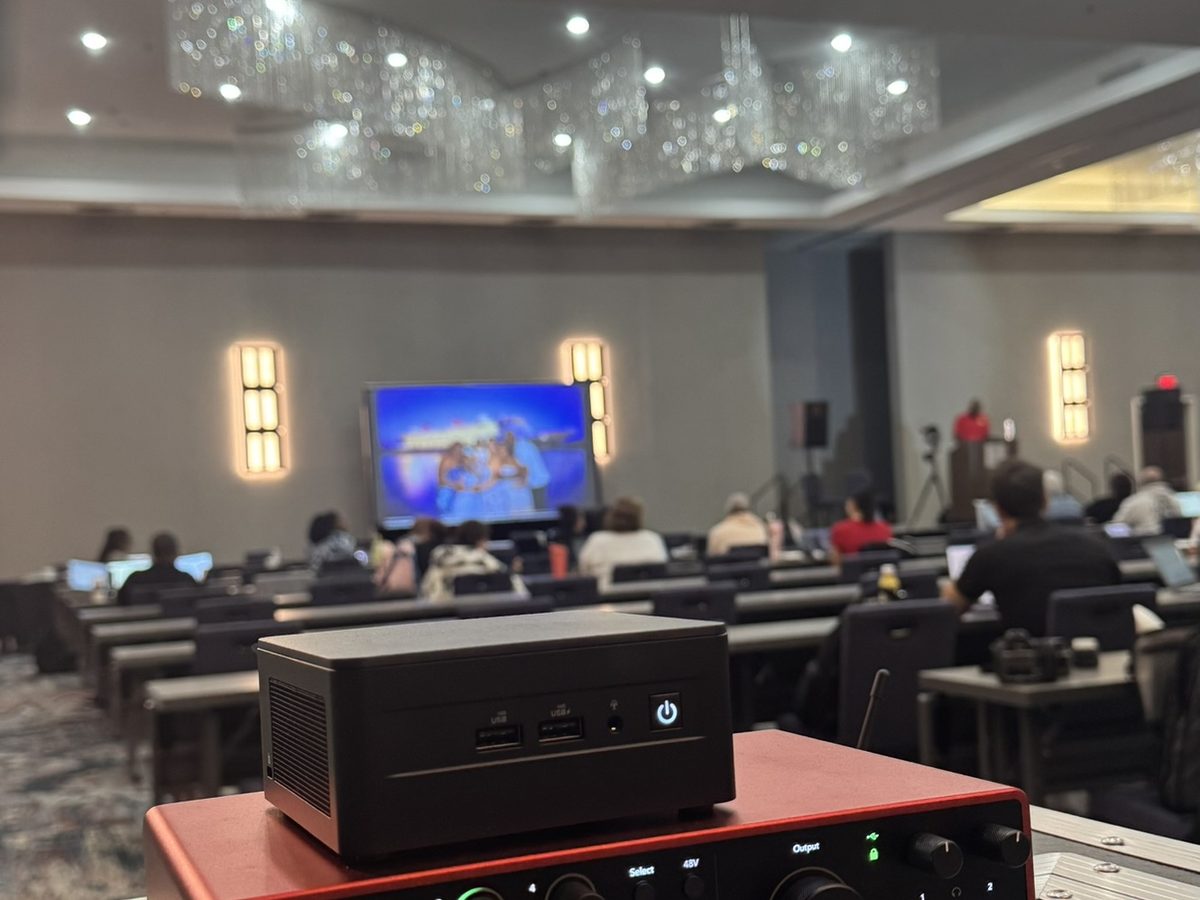
Schools, churches, and community spaces
These venues often have difficult acoustics, high ceilings, reflective walls, and flexible seating arrangements. De-Feedback is at its most useful when you need more usable vocal level and the system has to stay smooth and stable.
Large or reverberant venues
Sound quality gets harder in larger spaces, and our post on sound quality in large venues covers why. In these environments, tools that reduce room reverb and improve vocal isolation can help people stay engaged with the message.
Why This Matters for Guest Experience
Guests rarely know what De-Feedback is, but they notice the result immediately. They notice when speeches are easy to understand. They notice when the microphone stays quiet between sentences. They notice when the presenter sounds confident and clear from the back row.
That is the real value: better communication, fewer distractions, and a more professional event experience.
Final Thoughts on De-Feedback
De-Feedback works on top of a proper audio setup, and the setup does most of the work. It is also a serious tool for improving gain before feedback, reducing room reverb, and helping live vocals cut through with better clarity. For events where speech intelligibility matters, that can be a major upgrade.
If you are planning a wedding, corporate event, school function, or private event in Dallas-Fort Worth and want cleaner, more intelligible live audio, Dallas Event Audio can help design a system that takes advantage of the right microphones, placement, mixing, and De-Feedback processing for your venue.