
Wedding & event uplighting rental in Dallas-Fort Worth.
Battery-powered wireless uplights that wash a plain venue in your colors (walls, columns, drape, bars and facades) spaced for your room, matched to your palette, and delivered, placed, focused, programmed and tested by our own technician, then struck after your event. Serving the Metroplex since 2001.
Your run sheet, on three buttons.
We build your looks into presets at load-in, one for each moment on the schedule. Your DJ or planner brings up the next one with a single button press, whether the night is a wedding reception, a conference or a gender reveal.
At a recent wedding the uplights held a warm white through cocktail hour and dinner. After the speeches the bride had a surprise for the room, and on her cue the walls went to alternating shades of pink with animated color chases running from our Wolfmix DMX console: a gender reveal, in light. When the DJ opened the dance floor, the uplights switched to following the beat of the music and stayed there for the rest of the party. Three looks, three buttons, one room.
Mix an uplighting color on a virtual wall.
Our uplights hold six colors of LED behind one lens: red, green, blue, white, amber and UV. The color that lands on your wall is all six of them adding together. Move the faders the way a technician does at load in, change the surface you are aiming at, and watch what the room gives back.
Fixture channels
Each fader is one emitter inside the fixture, 0 to 255, the way it comes off a lighting console.
White and amber are what make pastels possible
Red, green and blue on their own give you saturated color. White lifts a saturated color toward a pastel, which is how blush, ice blue and champagne happen at all. Amber warms skin tones and keeps a room from looking like a computer monitor.
The UV fader looks broken until you aim it at white
UV puts out very little visible light of its own. Point it at white drape, linens or shirts carrying optical brightener and the fabric starts glowing. Set the surface to white drape and push UV up by itself to see it.
The wall decides half of the color
The same fader positions land differently on white drape, on a gray ballroom wall and on brick, because a wall reflects only what it already contains. Deep blue on brick nearly disappears. That is why we walk your venue before we promise a color, and why we set color on site rather than from a swatch emailed ahead of time.
A real room adds light of its own
This is a simulation, built for the fun of it. House lights, candles, window light at golden hour and whatever your photographer is bouncing off the ceiling all move the answer, which is what the walkthrough on the day of your event is for.
What each color does to a real room.
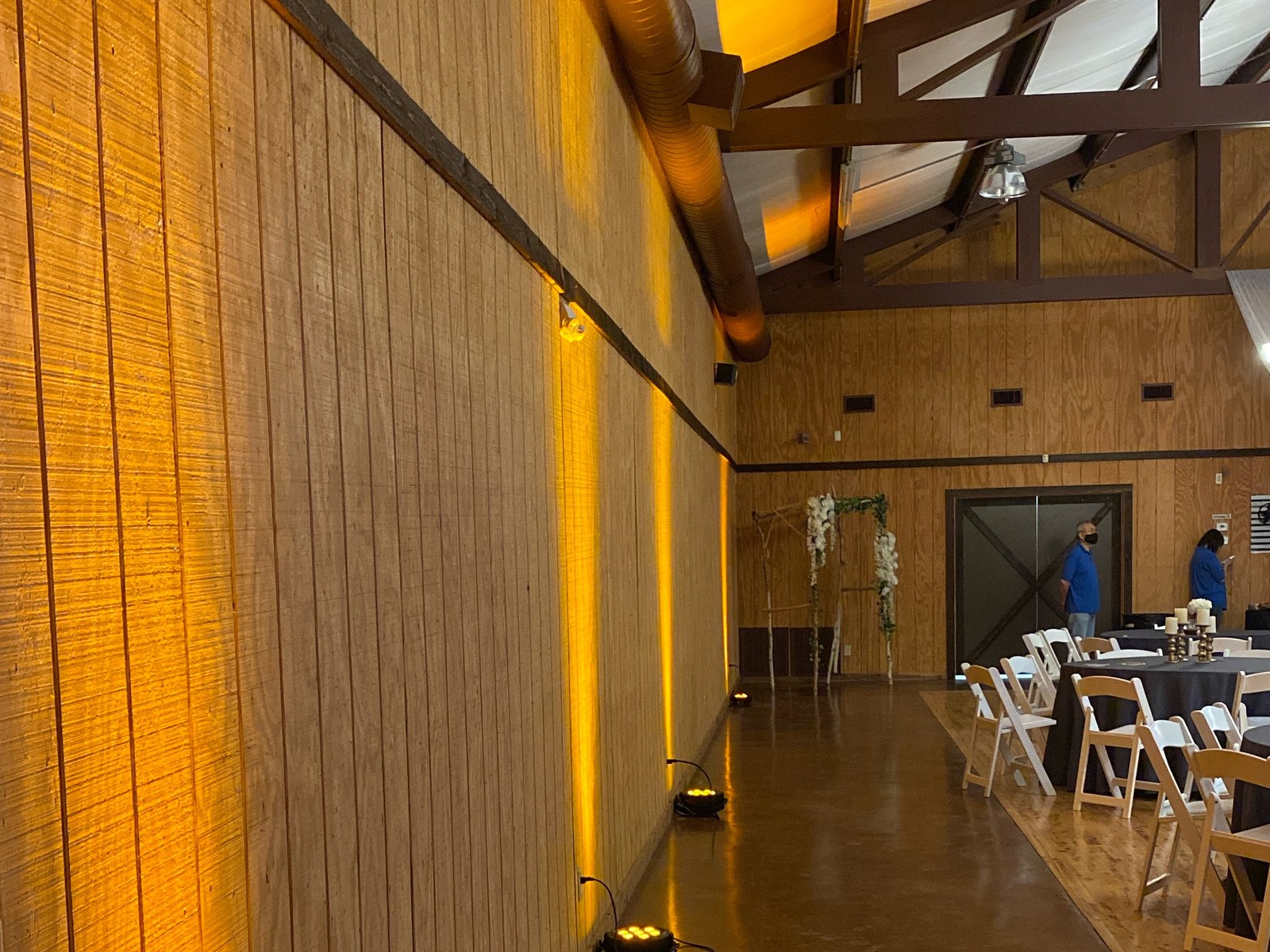
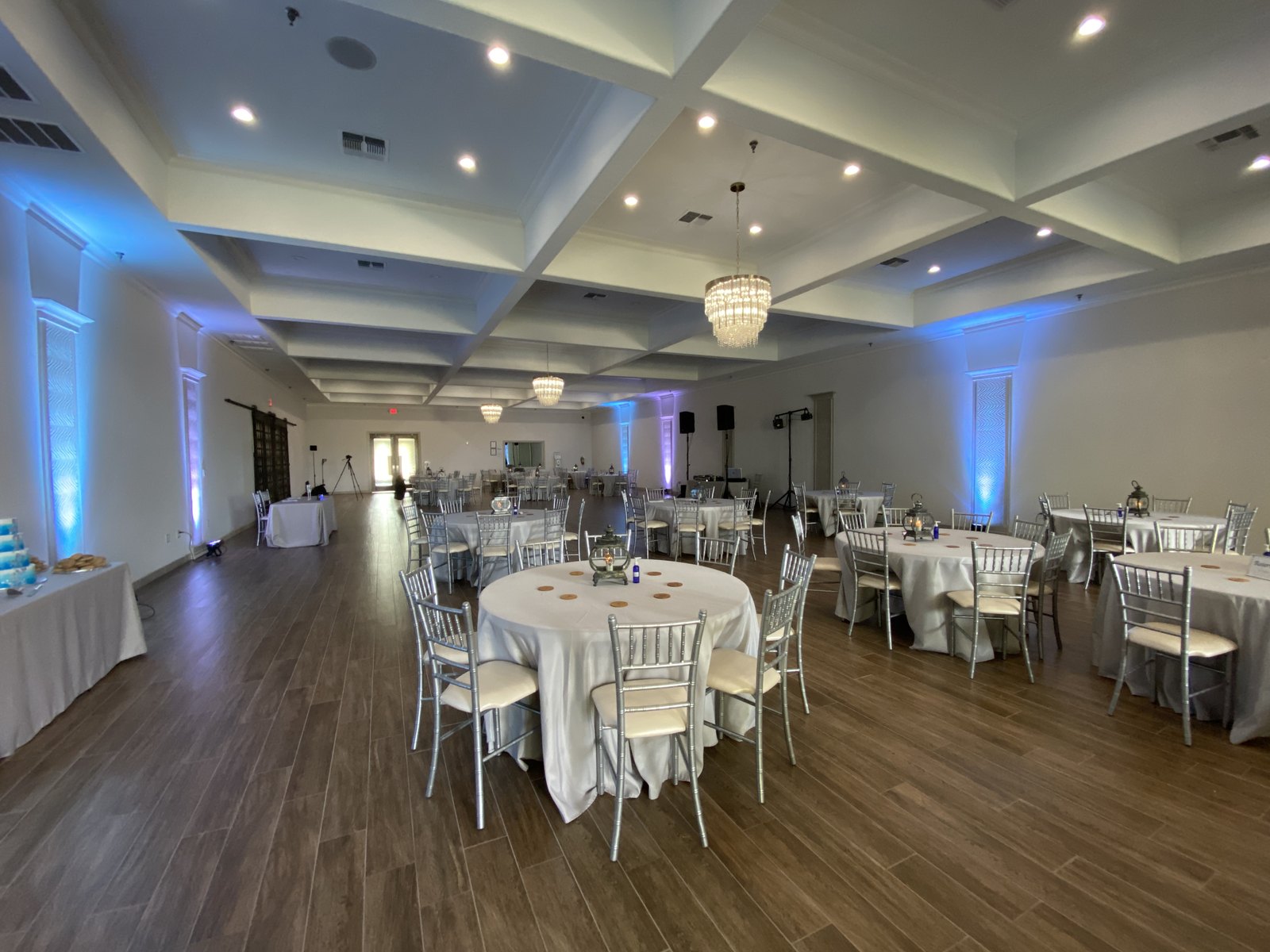
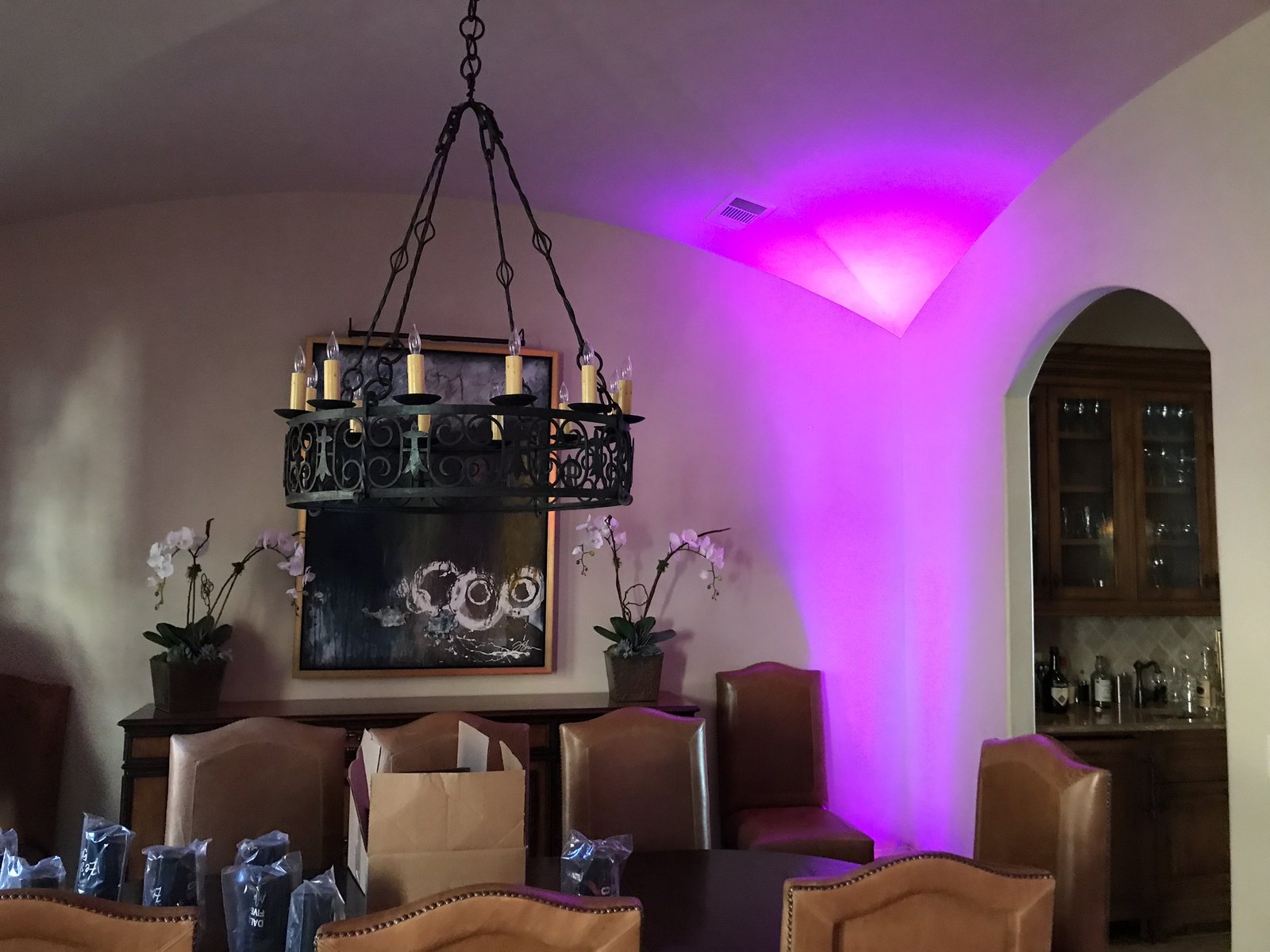
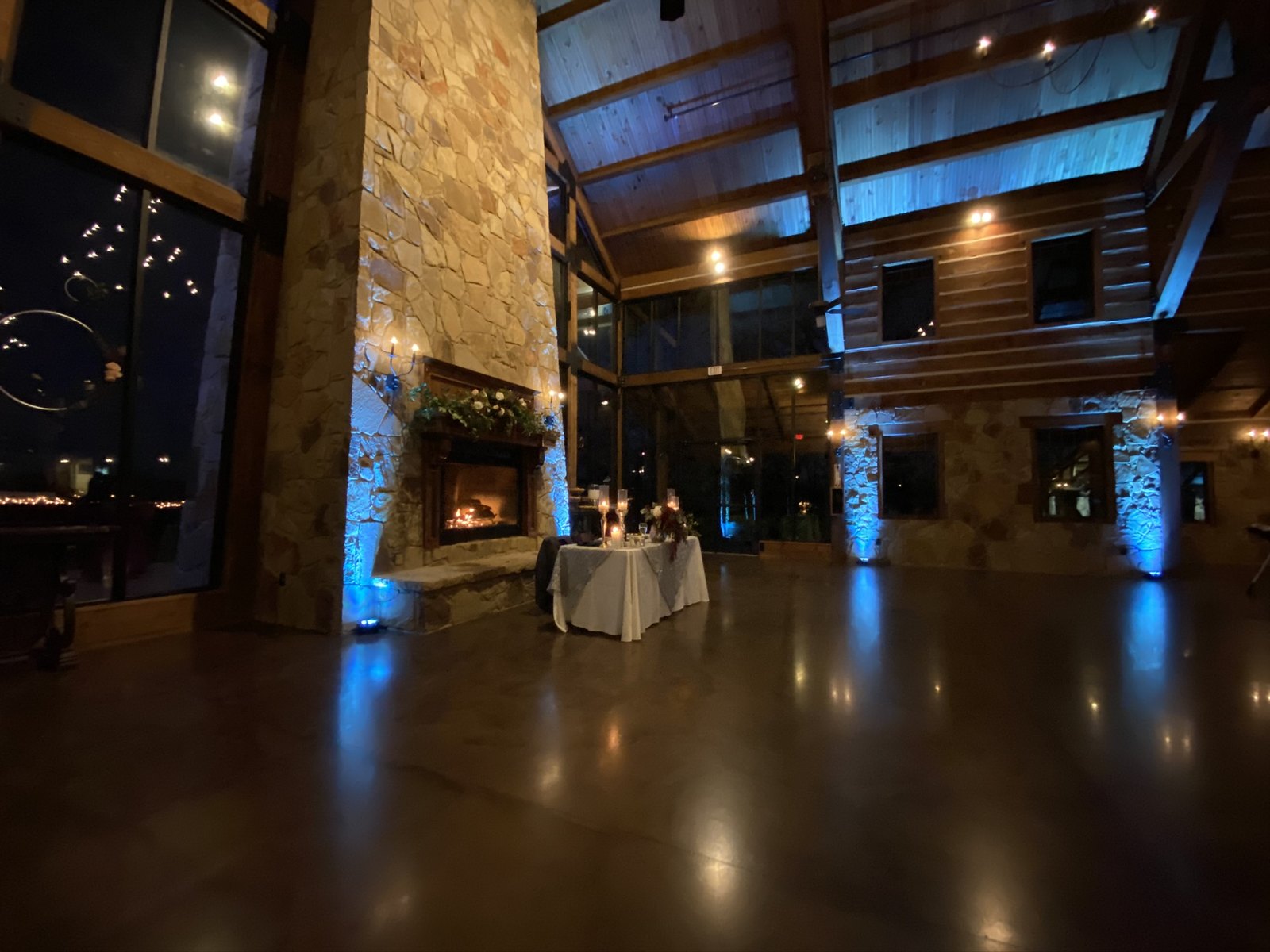
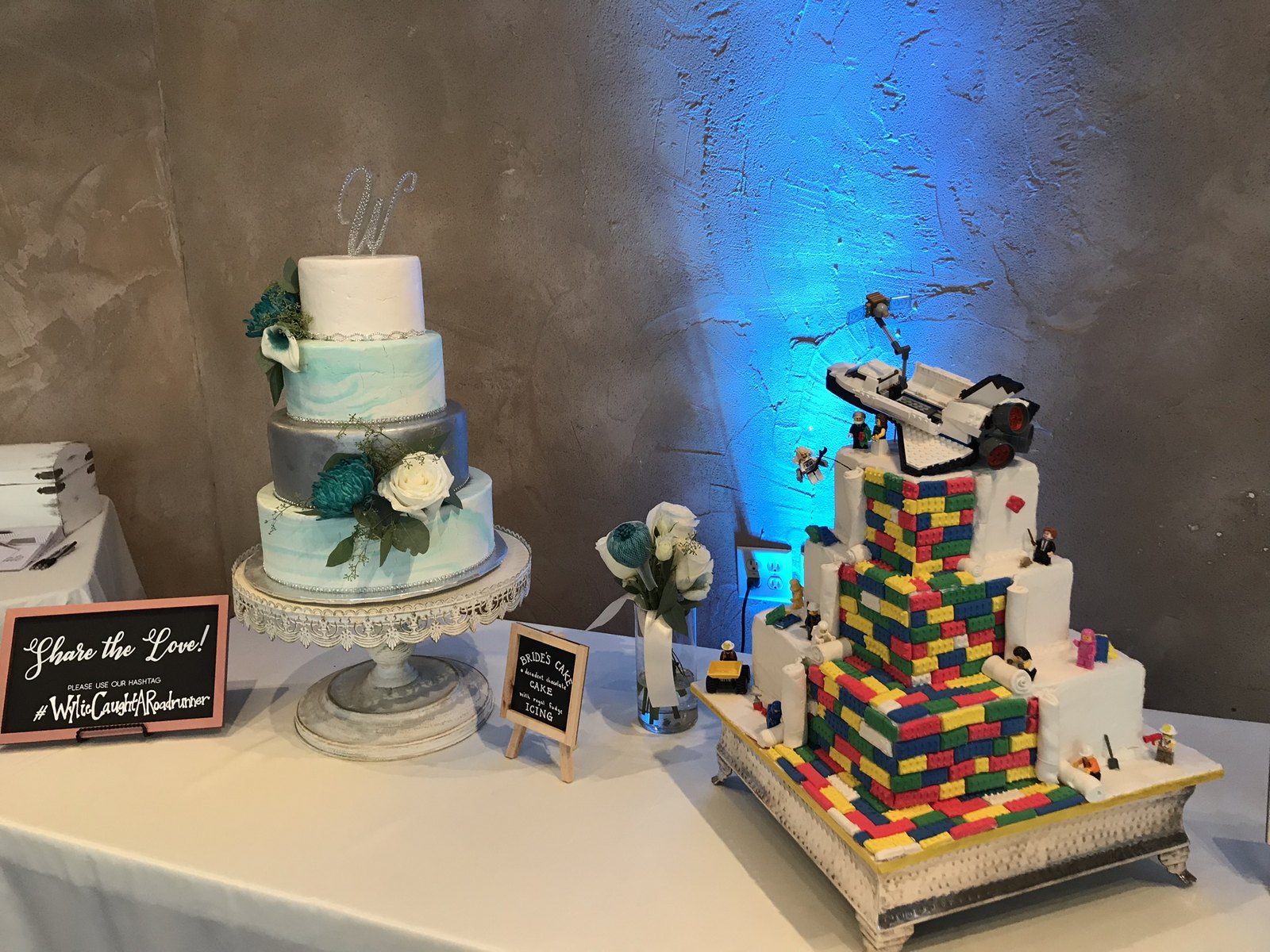
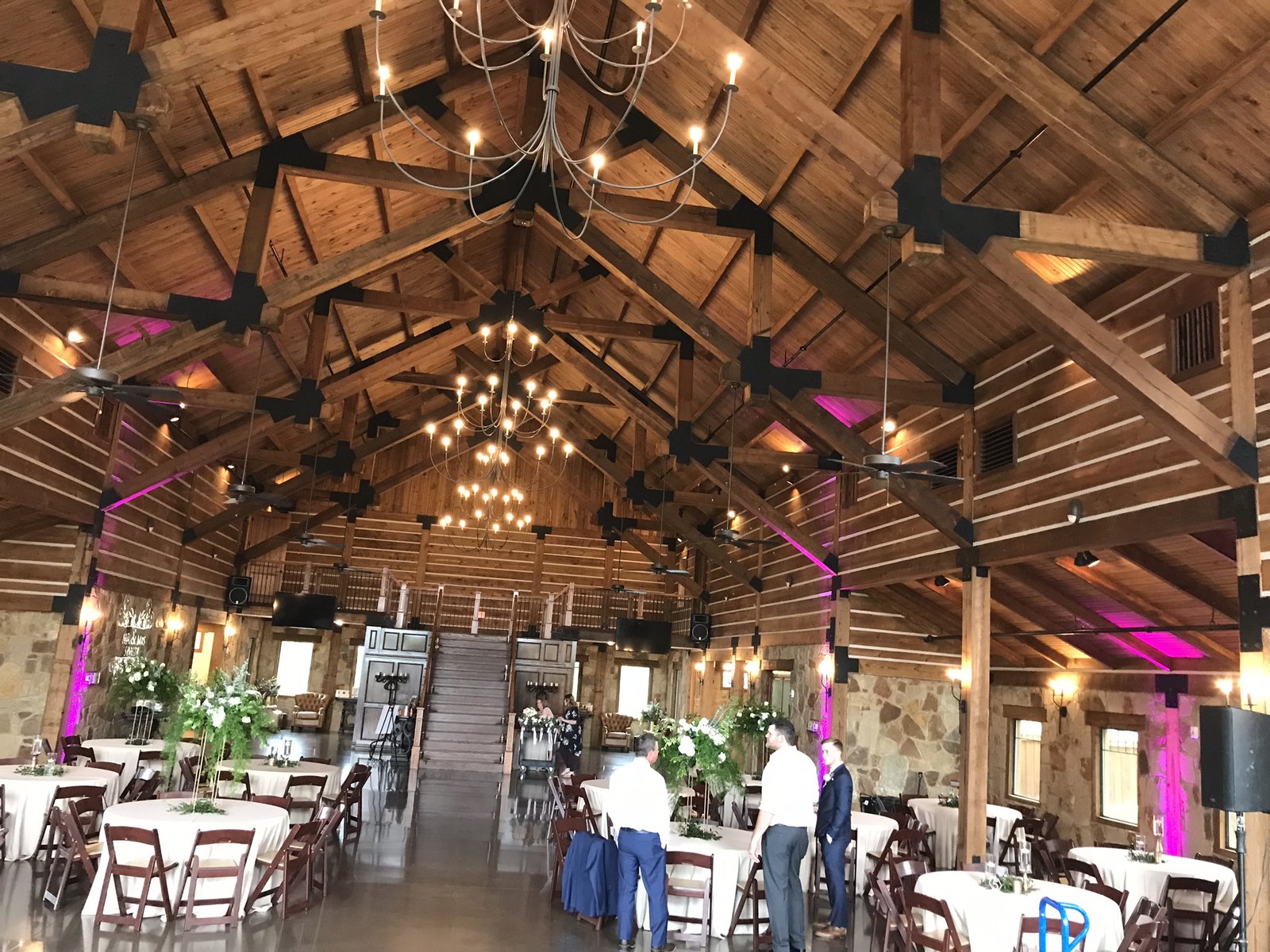
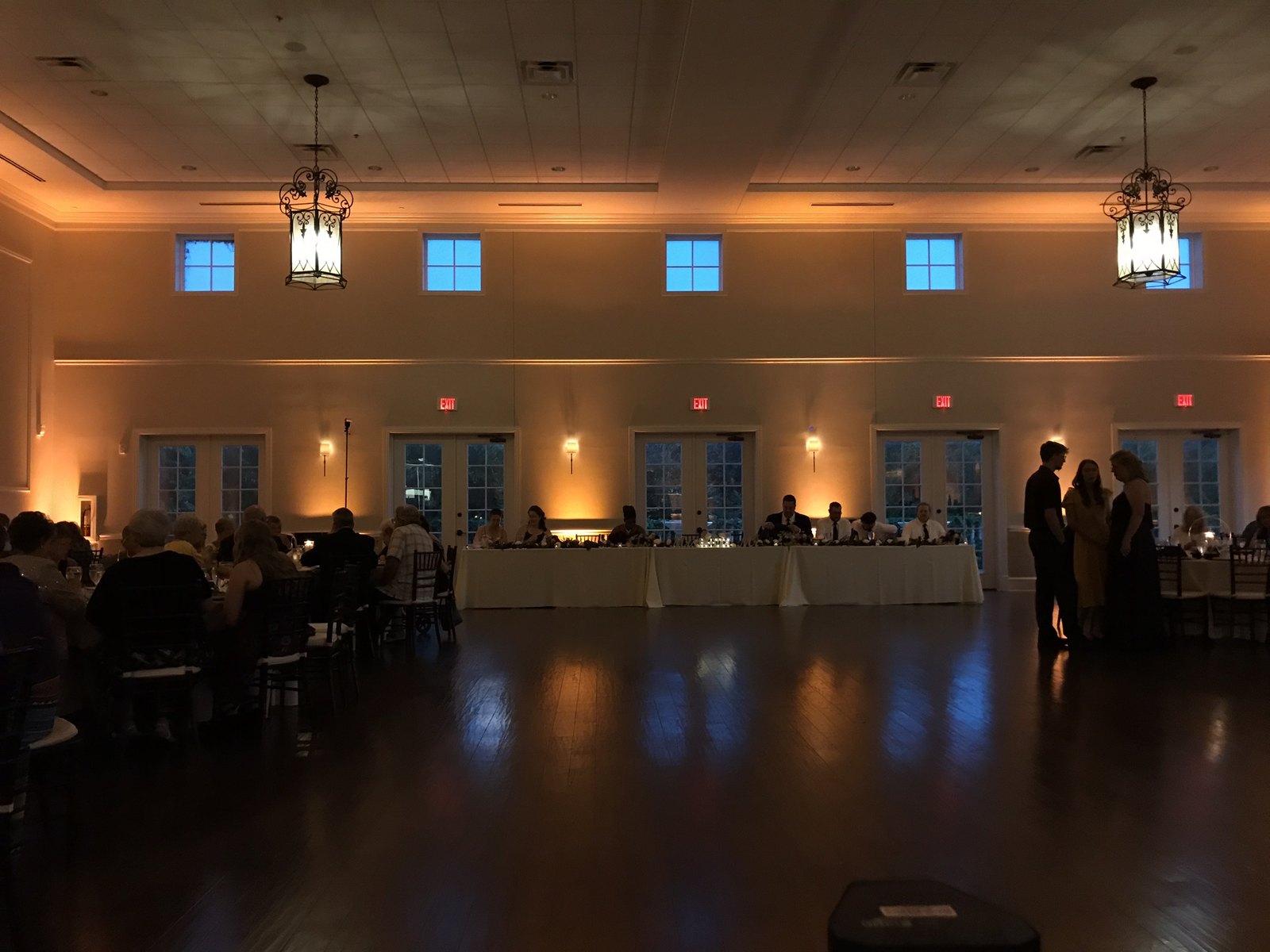
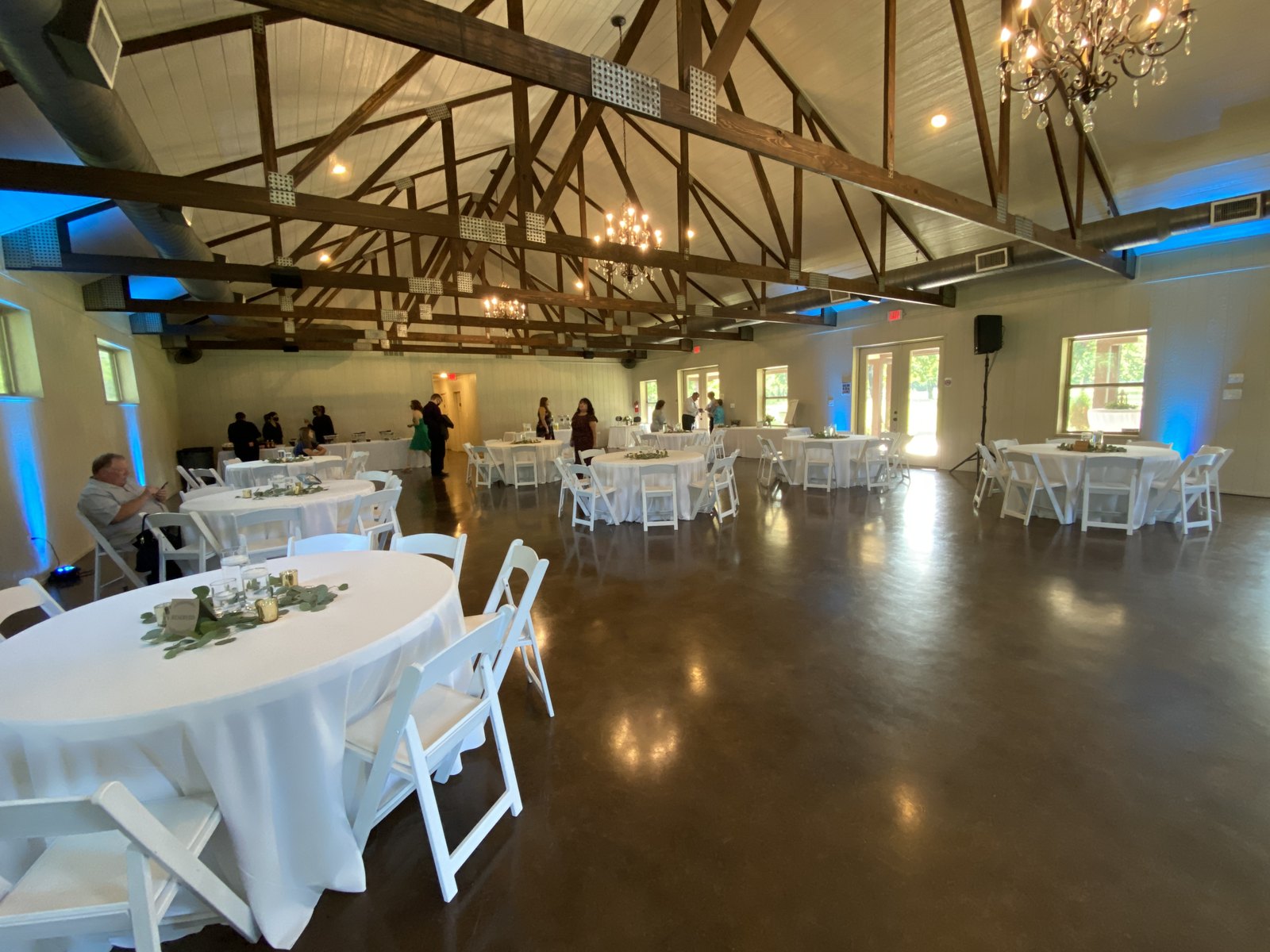
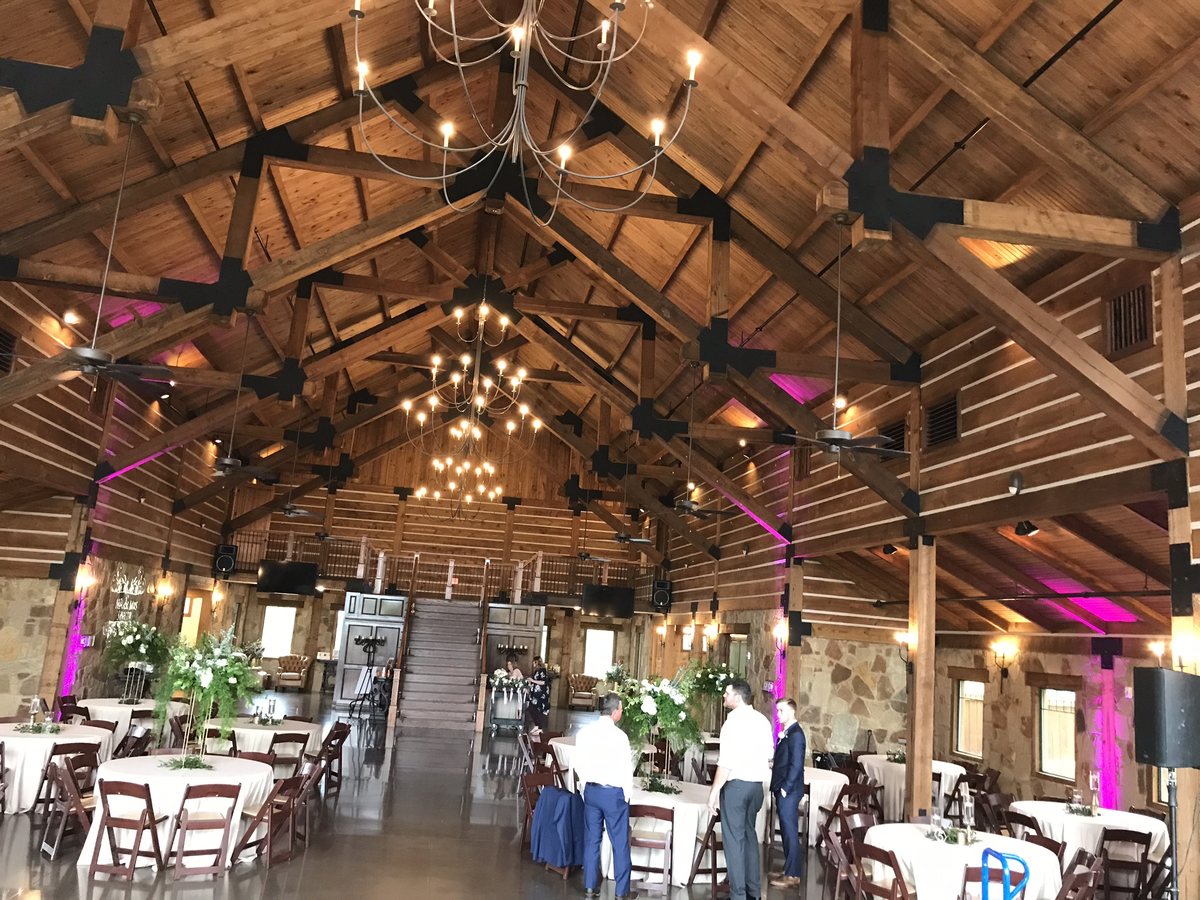
Every one of these is a real DFW room we lit. Wood soaks up color and wants more of it. White drape gives it back. Stone goes cool. Find the room closest to yours and you have your answer faster than any swatch will give it to you.
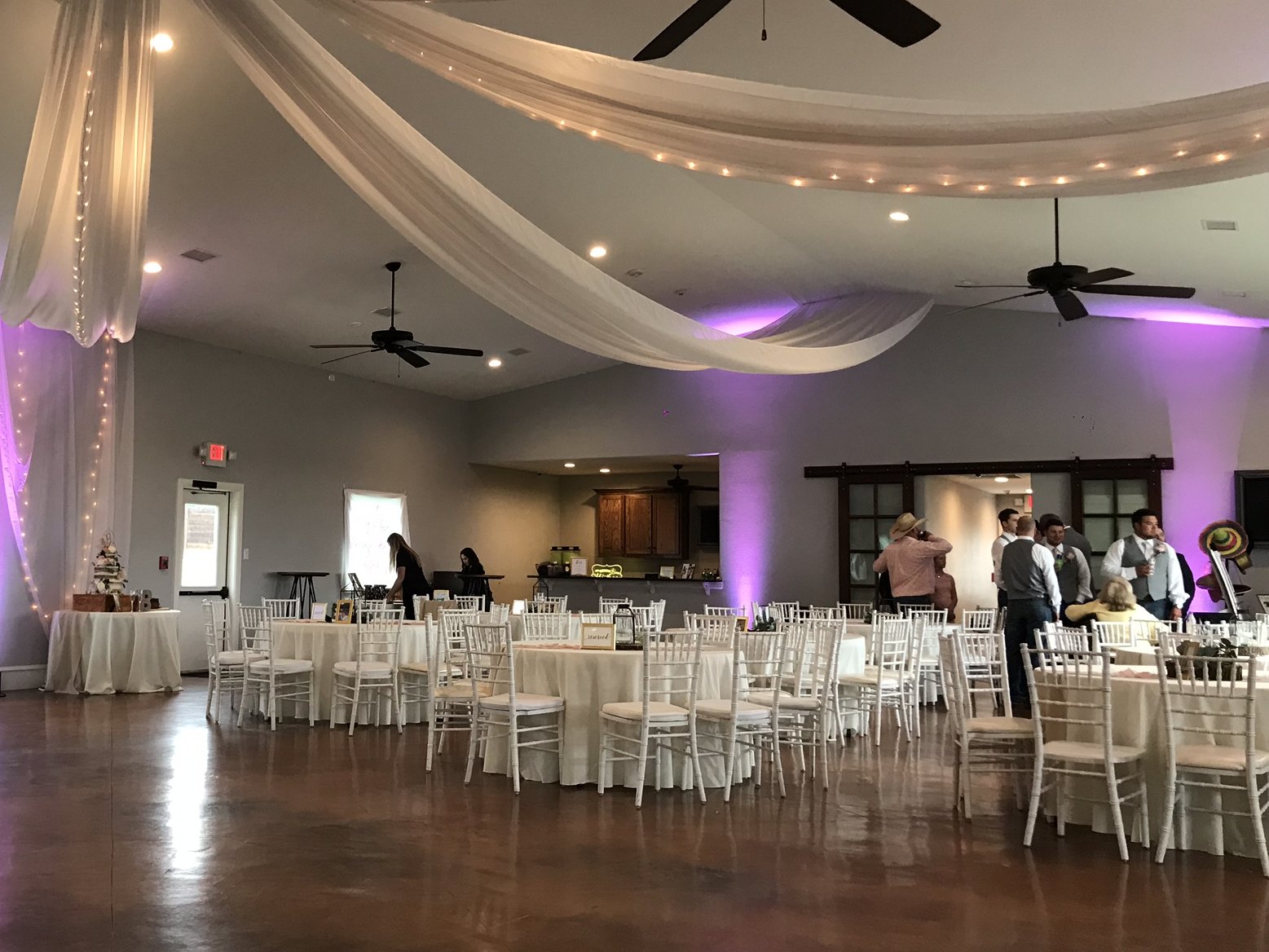
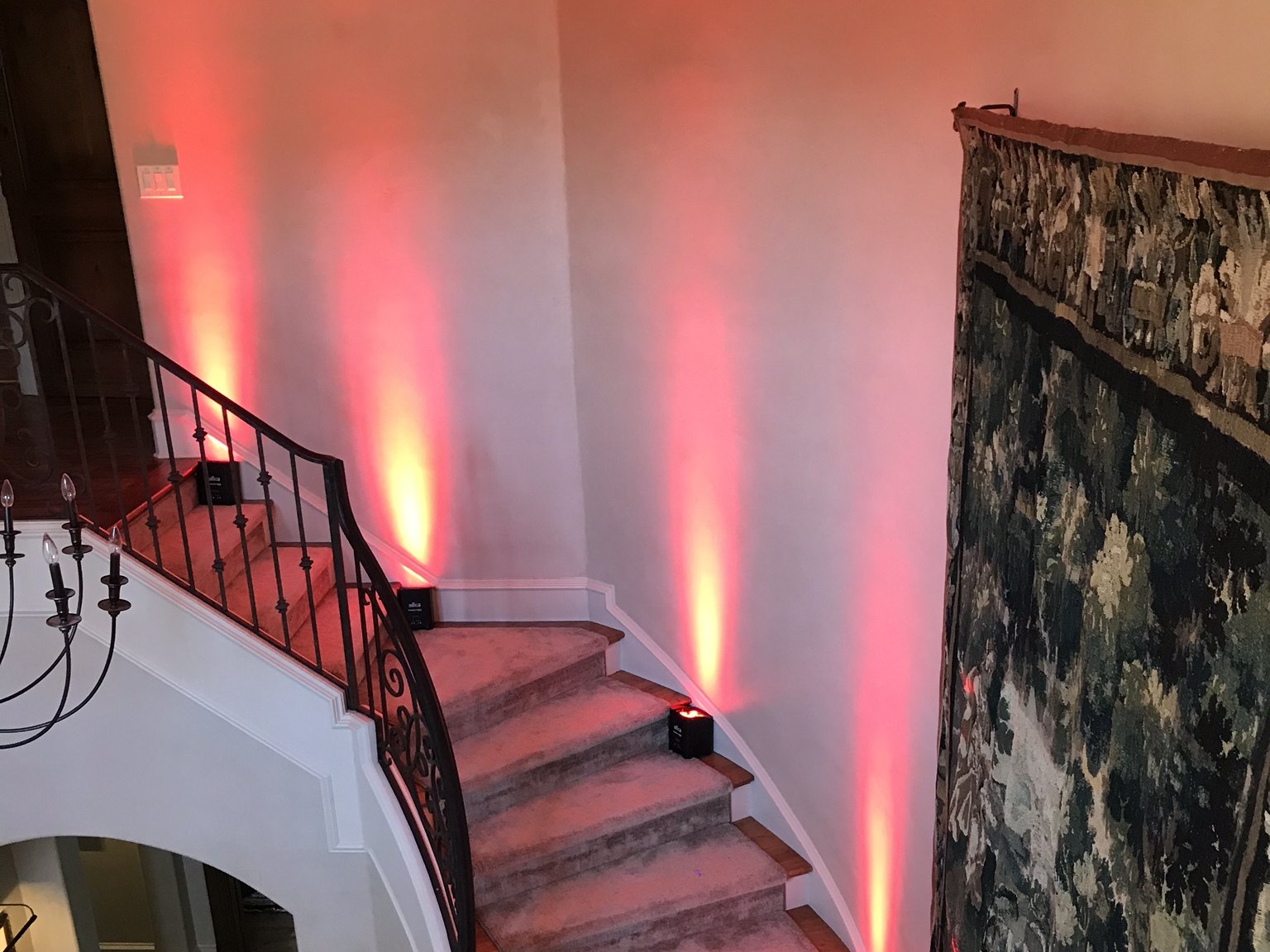
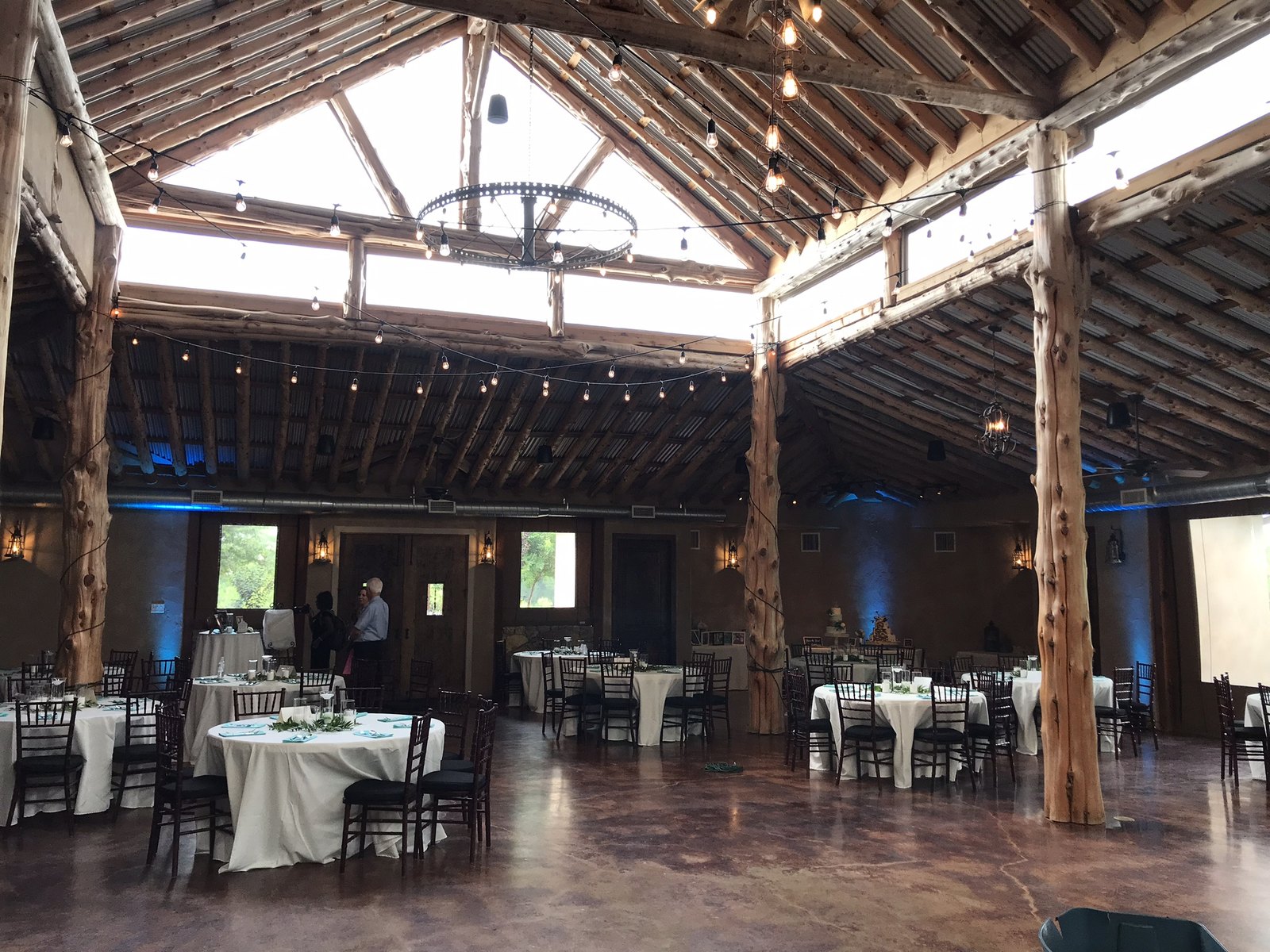
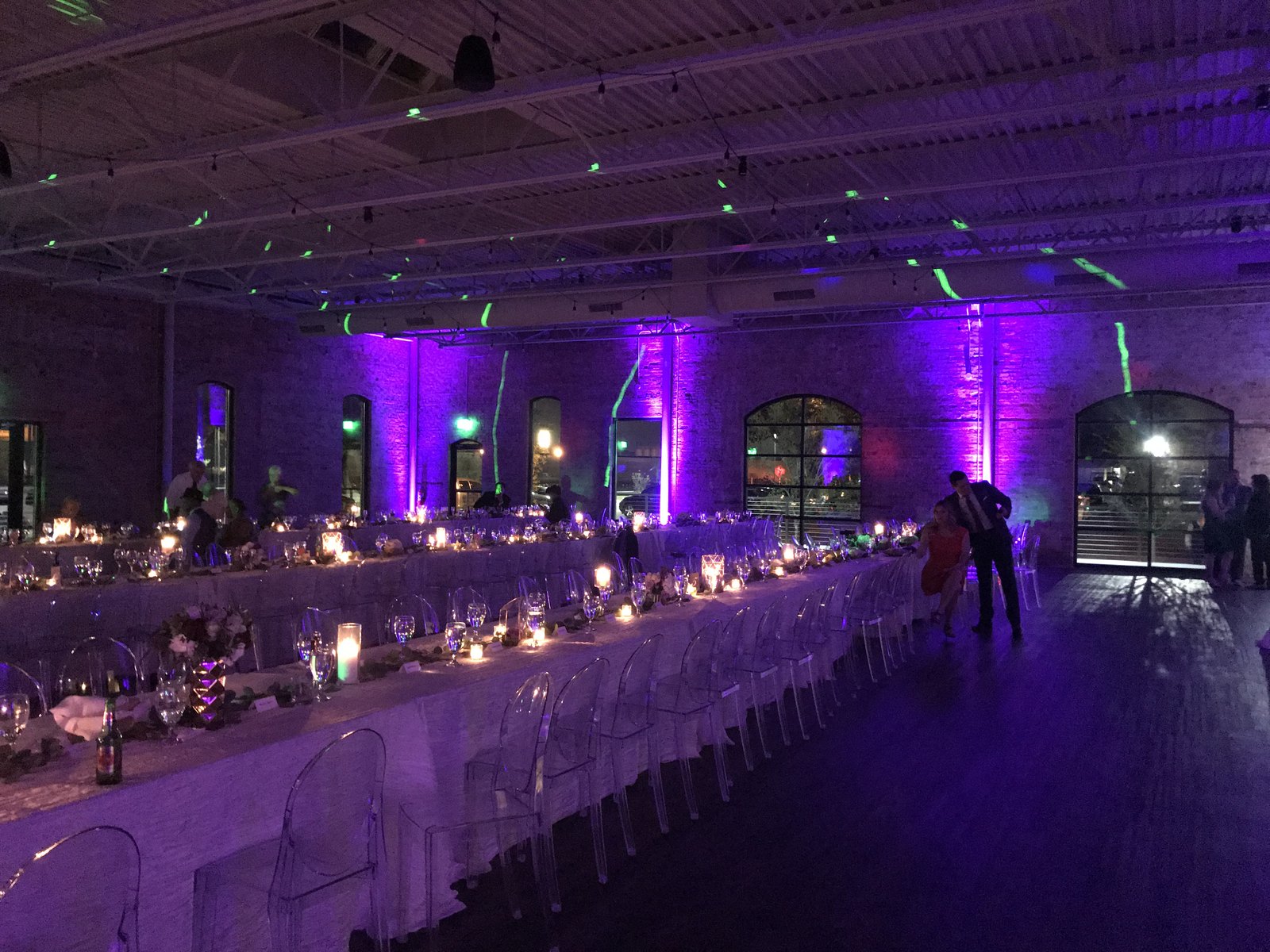
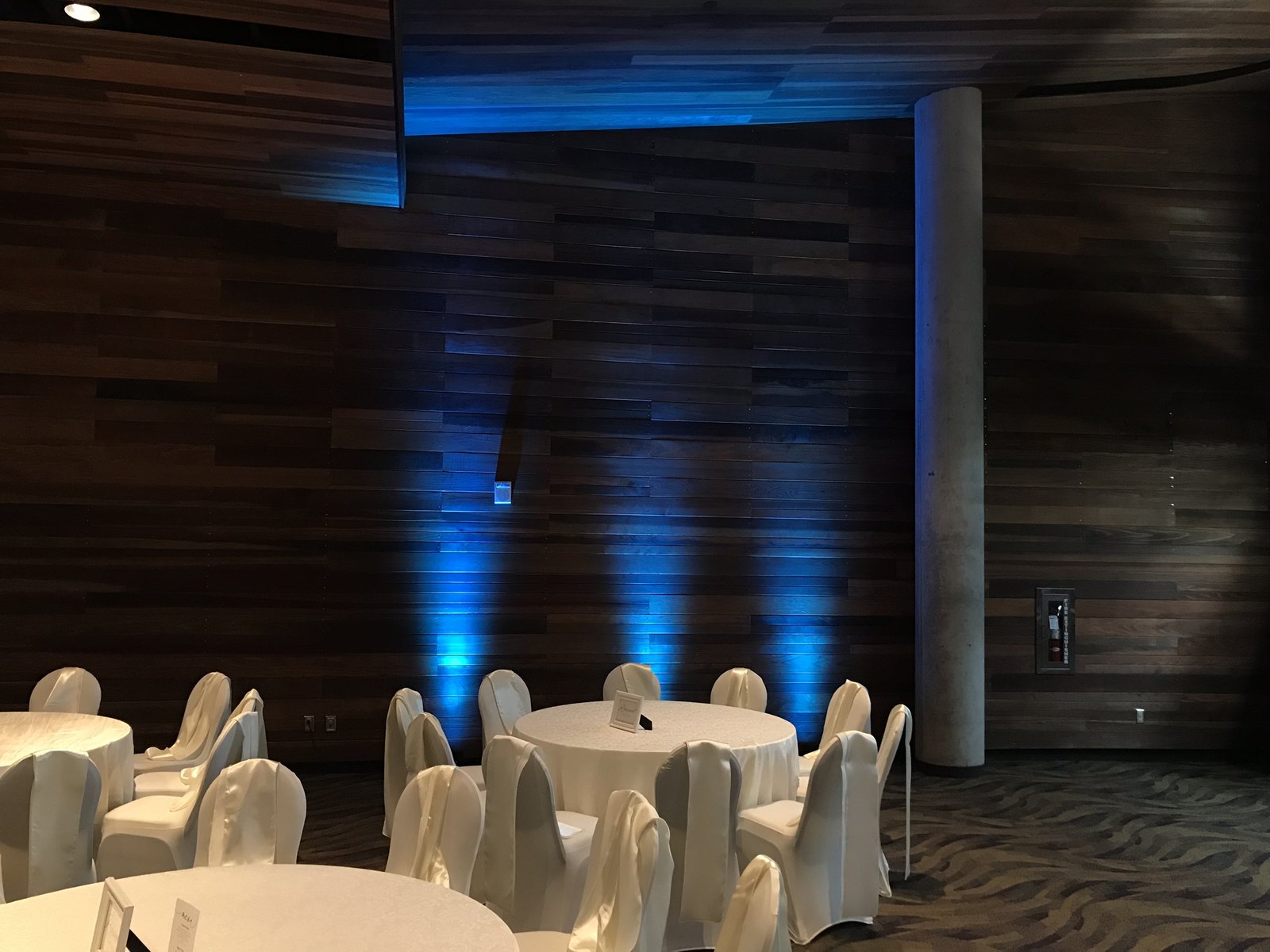
Uplighting changes the entire room at once.
Every venue looks like itself under the house lights. Beige walls stay beige, the ceiling stays wherever it is, and the photos come back looking like a conference room with flowers in it. Uplighting is what turns that room into your room: a ring of lights around the perimeter, aimed up the walls and columns, washing the whole space in a color you chose.
It is the first thing we recommend on most wedding lighting lists, because it works on the whole space rather than one corner of it, and every photograph taken that night is taken in the light you chose. It also does something few people think to ask for: it pulls the eye up the walls, away from a dated carpet, a service door or a wall of banquet chairs stacked in the corner.
We place them the afternoon of your event, walk the room with the color up, and adjust until the wash is even. Then we come back at the end of the night and take them out. Every fixture is ours to handle.
At a Halloween themed wedding last fall we set the perimeter in amber and orange, alternating fixture by fixture, and programmed them to fade slowly up and down in intensity so the whole room flickered like candlelight. The photographs look like the reception was lit by a hundred candles, and every one of them was a battery uplight on the floor.
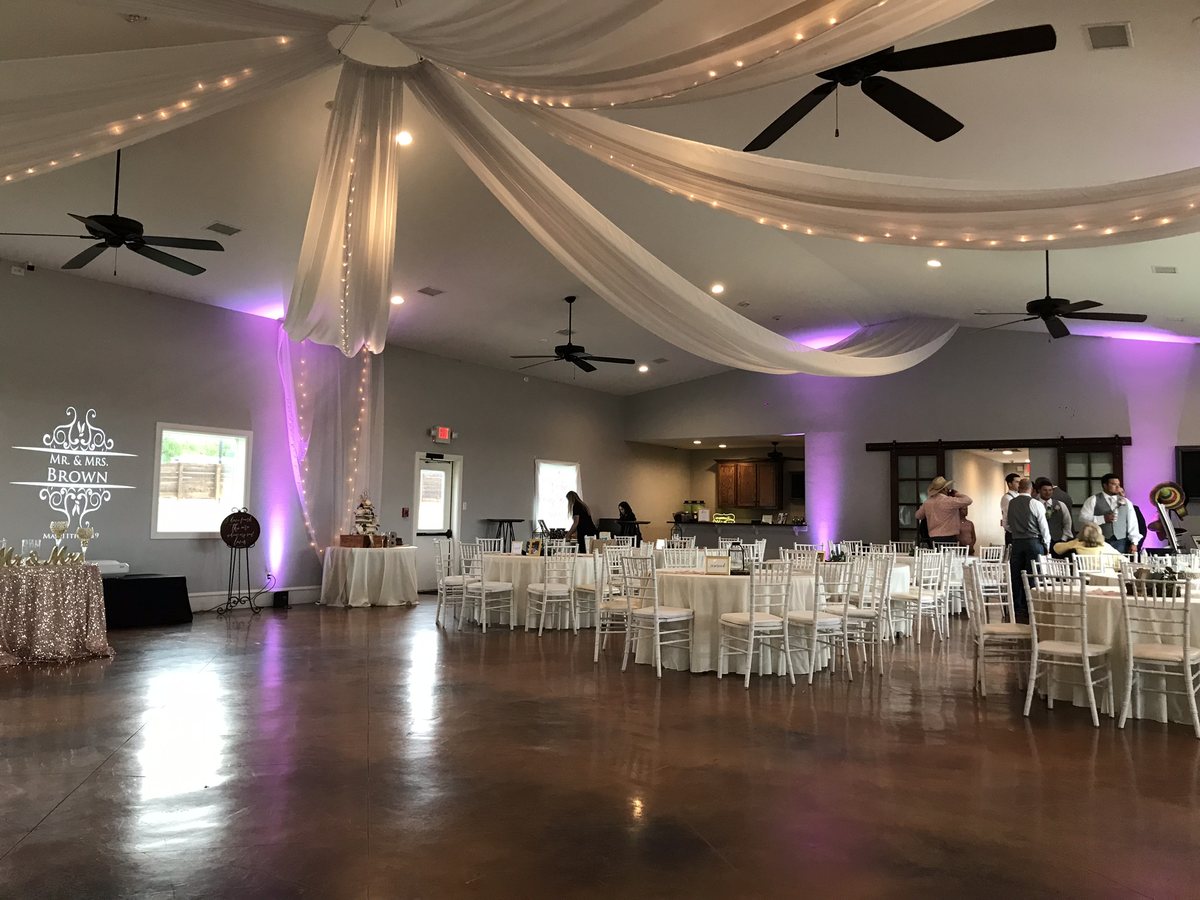
Where the uplights go.
“Uplighting” sounds like one thing you either have or do not have. In practice it is six or seven separate decisions about surfaces, and the difference between a room that looks designed and a room that looks lit is which of them somebody thought about.
Perimeter wall wash
Fixtures spaced evenly around the outside of the room, aimed straight up the walls. This is what people mean when they say uplighting, and it is the layer everything else sits on top of. Spacing is the whole game. Too far apart and you get scallops of light with dark gaps between them, which reads as cheap even to people who could not tell you why.
Columns, arches & architectural detail
Columns, pilasters, archways, alcoves, beams and stone detail are the features that a venue was designed around, and house lighting almost always flattens them. A fixture at the base of a column throws light and shadow up its full height. It is the same trick used on buildings at night, and it gives a flat banquet room vertical depth.
Drape, backdrop & head table
The wall behind the head table, the sweetheart table or the stage is in a disproportionate number of your photographs, so it gets treated separately from the rest of the perimeter. Washing drape from below gives fabric its folds back; a flat wall behind a couple reads better in a slightly different tone from the rest of the room, so they separate from it rather than disappearing into it.
Bars, lounges & cocktail spaces
Cocktail hour and the bar area are usually lit by whatever the venue happens to have, which is usually the house lights alone. Uplighting a bar front, a lounge grouping or a cocktail area carries your color into the parts of the night that happen before and around dinner, so the evening looks like one event rather than a lit room and some corridors.
Outdoor & facade uplighting
Trees, hedges, a building facade, a tent’s poles and peaks, the entrance guests walk through. Outdoor uplighting is what stops an evening event from ending at the doorway, and it is the first thing arriving guests see. It is also a power, weather and fixture-rating conversation before it is a design one, which is where battery fixtures earn their keep.
Ceilings & structure
In rooms with something worth showing overhead (a coffered ceiling, exposed trusses, a tent’s interior peak) light aimed up into it lifts the whole space and makes a low room feel taller. Where the ceiling is plain, we leave it dark and let the walls carry the room.
The six things we work out before a single fixture is loaded.
This is the part a rental listing leaves out, and it is most of what you are paying someone for.
Spacing and fixture countMeasured, not guessed
We work from the room’s actual wall lengths and lay fixtures out so their beams overlap slightly before they reach the top of the wall. That overlap is what produces an unbroken wash instead of a row of separate glowing patches. The math decides it, and it is the first thing we check in any uplighting plan.
Wall height and beam angleHow far the light travels
A ten-foot banquet room wall and a twenty-four-foot barn wall need different beam angles to fill properly. Too narrow and the color stops a third of the way up; too wide and it spills across the ceiling. We ask about ceiling height early because it changes the fixture choice as well as the count.
Battery runtime versus your timelineFrom doors to last dance
Wireless fixtures run on their own batteries, which means runtime has to cover your whole event with margin, including the ceremony, the photos before doors, and the reception running long, which it usually does. We plan to the real length of your night rather than the four hours on the contract.
Fixed color or programmed changesOne look or several
The simplest version is one color set at load-in that holds all night. The better version, in most rooms, changes: warm and low through dinner, then something with more energy when the floor opens. Our technician programs that sequence into presets before doors open, and your DJ or planner recalls each one with a single button press, so the room follows the night. Color changes called by hand during the event are available with a lighting engineer on request, and a technician already on site for your audio, a follow spot or a fuller production package with us can call them too.
What the house lights are doingThe hidden variable
Uplighting competes with whatever the venue has on its own dimmers. A ballroom at full house level will wash out any color you put on the walls. Part of our job is knowing which venues can dim and who to talk to about it before the day, because a room that keeps its house lights up needs a different design.
How it photographsPlanned for the camera as well as the eye
Cameras and eyes disagree. Saturated blues and magentas look striking in the room and can cool skin tones in every photo taken in front of them. We plan colors that hold up in both, coordinate with your photographer or videographer when they have preferences, and tell you when the color you want will not be kind to your photographs.
What we usually pair with the uplights.
Uplighting sets the room, but most nights want two or three of these working together. Tell us the venue and what is happening in it and we will tell you which ones matter, or see the full range on our lighting services page.
LED uplighting
Battery-powered wireless uplights placed around the perimeter of the room, washing the walls, columns, drapes and architectural features in a single color or a designed sequence. Everything runs on battery power, so your floor stays clear and so do the doorways your guests walk through.
Dance floor & DJ lighting
Moving heads, wash fixtures and effect lighting focused on the dance floor and run to the music, so the energy changes when the set does. Sized to the floor rather than the room. A dance floor lit like a nightclub in a room of eighty people reads as too much, and we would rather tell you that than sell it to you.
Monogram & gobo projection
A custom monogram, initials, date, logo or pattern projected onto a wall, a dance floor or the ceiling. We cut the gobo from your artwork, focus it on site and keep it sharp from the back of the room. Corporate events use the same fixture for a logo beside the stage.
Pin spot lighting
Tight, narrow beams aimed at one thing each: the centerpieces, the cake, the head table, the escort card display. Pin spots are why the flowers you paid a florist for still read as flowers once the room goes dark, instead of disappearing into a dim table.
Stage & ceremony wash
Front light on the people who are being watched: the couple at the altar, the band, the keynote speaker, the award recipient. Rooms are almost always lit from above and behind, which is flattering to the ceiling and ruinous to faces on camera. A wash from the front is what makes the video worth keeping.
Effects & specialty lighting
Follow spot for a grand entrance or a first dance, low-lying fog for a dancing-on-the-clouds first dance, and full laser shows for events that want the room to go somewhere else entirely. These make a moment rather than a room. They pay off on one or two cues rather than across the whole night.
What uplighting does in a Dallas-Fort Worth venue like yours.
The same fixtures do very different things depending on the walls they are pointed at. This is the conversation we would have with you on a site visit.
Hotel ballroomNeutral walls, low ceiling
The classic case. Beige or gray walls, patterned carpet, a ceiling full of house downlights that flatten everything. Uplighting around the perimeter replaces the room’s color entirely, and dropping the house lights once dinner is served is what makes it land. Ballrooms are also where an even wash matters most, because the walls are long and flat and show every gap.
Barn & ranch venueWood, beams, height
Wood eats light, so barns need more fixtures than their square footage suggests, and warmer colors read far better than cool ones on stained timber. The win here is the vertical structure: posts, beams and trusses lit from below give the space a depth that bistro lights on their own only hint at.
Historic & brickTexture worth showing
Exposed brick, stone and plaster are the one case where the wall is already the feature. Uplighting is aimed at raking across the surface rather than flooding it, so the texture throws its own shadows. Restrained color and more contrast, so the building is revealed rather than repainted. We lit a dim brick warehouse for a private event with pure white uplights and the room changed completely: the brick came forward, the ceiling gained height, and the space read as a venue instead of a storage floor.
Country club & private diningWindows and warm wood
Lots of glass, which means the look changes completely between the cocktail hour and full dark. We plan for both, and we plan around the reflections, because an uplight aimed at a window wall at nine o’clock is lighting the parking lot.
Tent & outdoor receptionPoles, peaks and drapes to wash
With open sides, the light goes somewhere else: up the tent poles and into the peaks, along the perimeter drapes, into the trees at the edge of the site. Outdoor lighting is also a power and weather conversation before it is a design conversation, and battery fixtures solve most of it.
Church & chapelFixed lighting, high ceilings
Ceremony spaces usually have fixed house lighting and a venue that limits what may be attached to anything. The work is front light on the couple and gentle accents that respect the space, and coordinating early, because the venue’s rules decide this one.
Choosing an uplighting color that works in your room.
Clients usually arrive with a swatch from the florist or a screenshot from Pinterest, and the honest answer is that a color on fabric and the same color on a wall are two different colors. Deep jewel tones read rich in a large ballroom and heavy in a small one. Blush and champagne look beautiful in person and can vanish on camera. Sharp blues photograph dramatically but drain the warmth out of skin tones on the dance floor.
So we talk about it. Bring your palette, your venue and your photographer’s preferences, and we will tell you what that combination does in that room, including when the answer is a warmer version of what you asked for.
Colors can also change through the night: one tone for the ceremony, a second for dinner, something with more energy when the dancing starts. That is a programming decision we make once, and it lands on a button.
If you want to see how a color behaves on a given surface before you commit to it, mix one on the virtual wall at the top of this page and switch the surface underneath it.
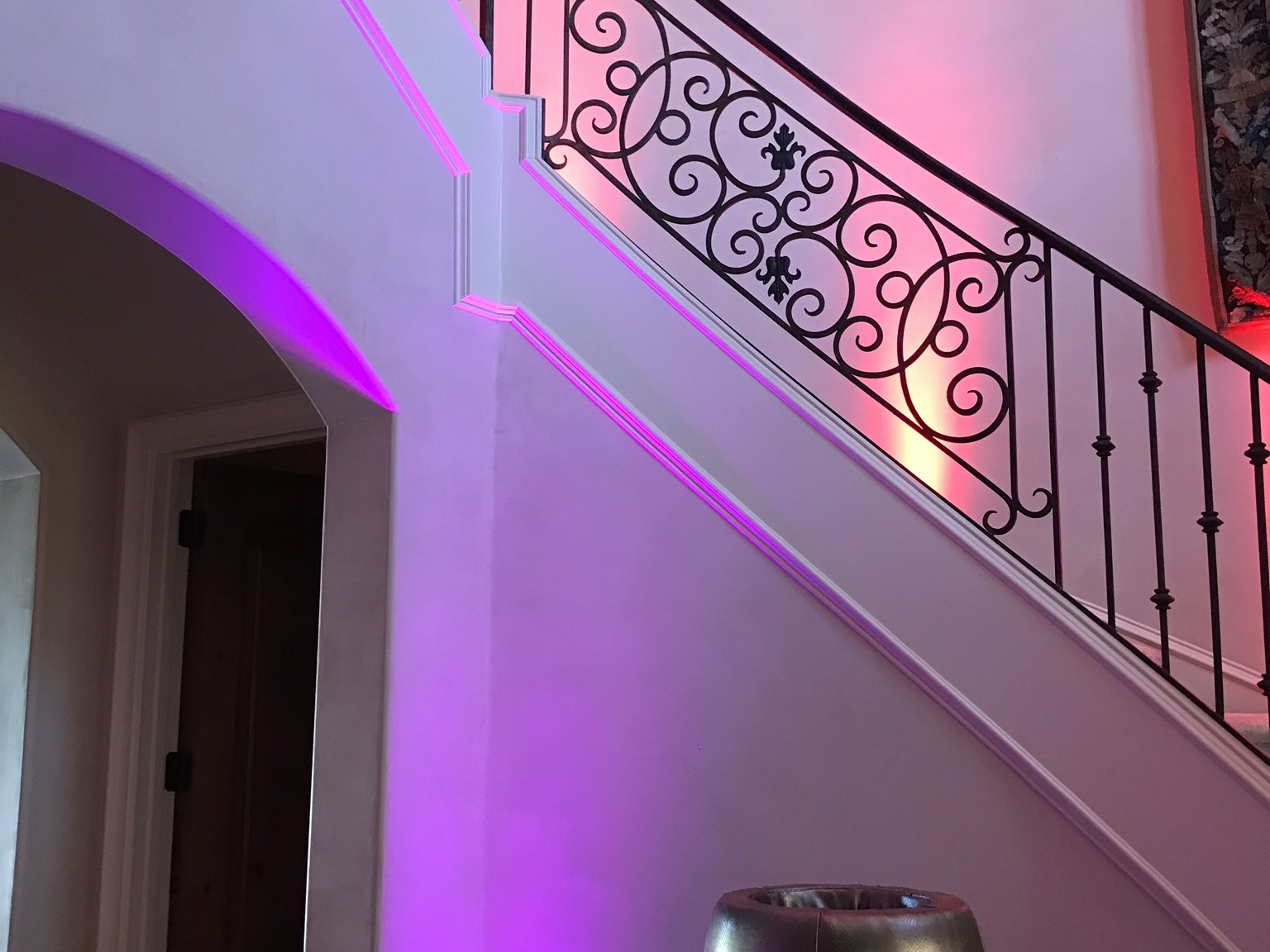
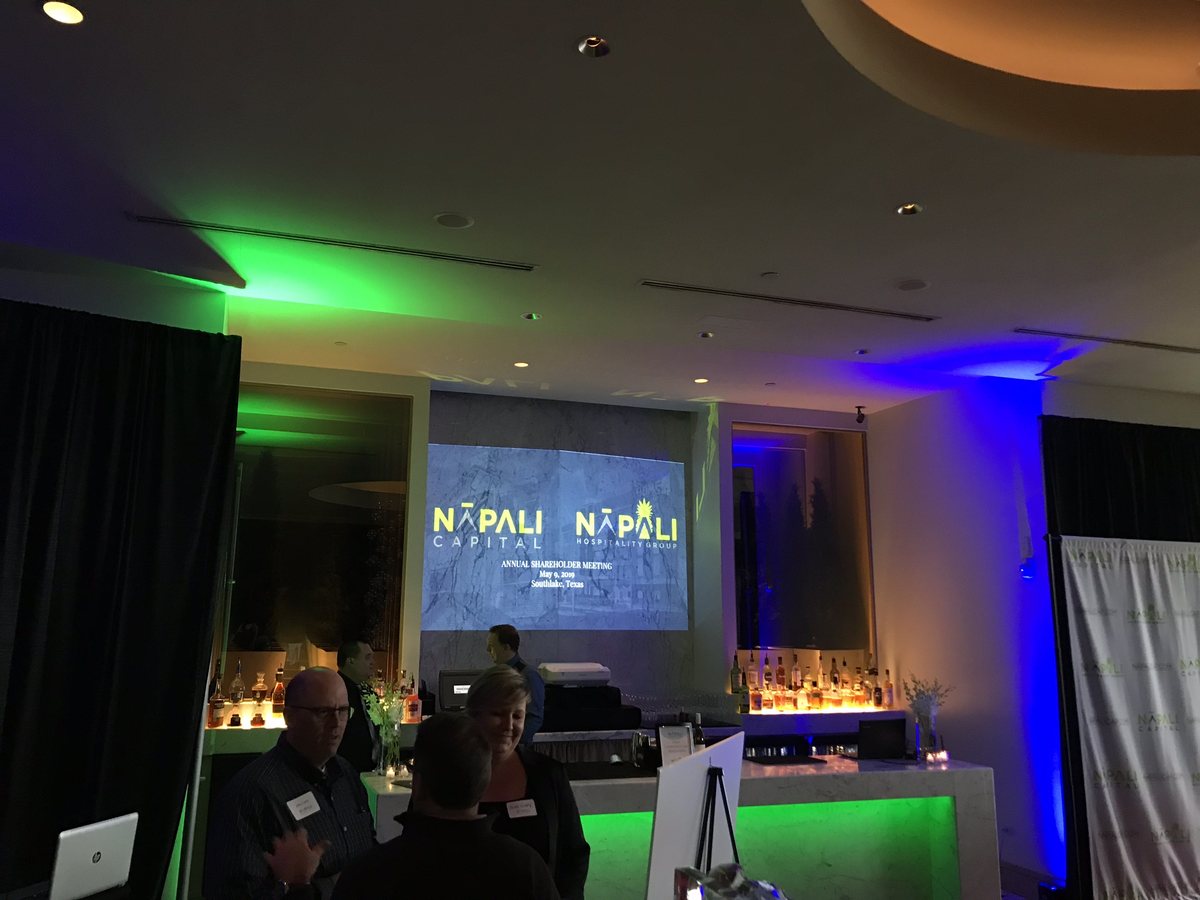
Corporate event lighting in your brand colors.
The same fixtures that wash a wedding in blush will hold a brand color across a whole ballroom for a gala, a product launch, a sales kickoff or an awards night. Give us the hex value from your brand guidelines and we will match it and hold it consistently on every wall, which matters when the room is going to appear in the recap video and on your social feed. At a Christmas holiday party we held the company's cyan across the room through the presentations, then shifted the whole perimeter to red and green when the program ended and the mingling started, so the brand had the stage and the season had the party.
Add a gobo of the company logo or a sponsor mark beside the stage, a proper front wash so your executives are lit rather than silhouetted, and it stops looking like a hotel function room. If there is a stage, a panel or a presentation involved, lighting and audio should be quoted together, and every microphone we send out runs our AI-powered De-Feedback system, so a speaker can walk the stage and the sound stays clean.
What comes with every uplighting rental.
Delivery and placement
We bring it, place it and aim it.
A designed layout
Fixture count and spacing come from your room’s dimensions and wall lengths, not from a package tier. Too few uplights in a long ballroom reads as scallops of light with dark gaps between them.
Color set on site
We set the color in the actual room with the actual house lights, and adjust it with you standing there. A color chosen on a screen is a starting point.
Battery power
Wireless uplights run the length of an event on their own batteries. Battery powered, so walkways stay clear, your venue's floor stays bare and the one outlet stays free.
Presets your DJ can recall
We build the looks into DMX presets at load-in, one for each moment on your run sheet. Cocktail hour, dinner, dance party. Your DJ or planner brings up the next one with a single button press, so the room follows the night with one press from the booth.
Venue paperwork
Certificates of insurance sent to your venue on request, and we work to their load-in windows and their rules. We have been in most DFW venues before.
Strike at the end
We come back and take it all out the same night or the next morning, to whatever your venue requires. Every fixture leaves with our crew.
One vendor for lighting and sound
If we are already handling audio or DJ services, the lighting shares a load-in, a crew and a point of contact, and the cues line up with the music.
From the first message to lights out.
Tell us the room
Date, venue, headcount and roughly what you are picturing. A photo of the space or a link to the venue’s site is worth a page of description.
We design the layout
Fixture count, placement and which of the other lighting elements are worth it for your room. You get a straightforward quote back within 24 hours.
Colors and cues
We settle the palette, any color changes through the night, and the moments that need something special: the entrance, the first dance, the toast.
Load-in and focus
We arrive inside your venue’s window, place and aim everything, bring the color up and walk the room with you before doors open.
One button per moment
Each preset is one button. Your DJ or planner changes the room when the night changes, and our crew comes back afterward to strike everything cleanly. Your last memory of us is the room looking right.
What drives the size of an uplighting quote.
Every quote is built for the room, because the same package lands differently in a long ballroom and a compact square one. What we can do is tell you honestly what moves it, so you know what you are trading when you plan.
Wall length before guest countThe main driver
Uplighting is priced by how much wall there is rather than how many people are in front of it. A long narrow ballroom for a hundred guests can need more fixtures than a compact square room for two hundred. This is why we ask about the venue before anything else.
How many elements you addUplights, floor, monogram, pins
Uplighting on its own is the entry point. Dance floor lighting, a monogram, pin spots on the centerpieces and a ceremony wash are each separate additions. Most rooms do well with two or three of them, and we will tell you which ones make the biggest difference to yours.
Load-in conditionsAccess, timing, stairs
A venue with a loading dock and a four-hour window is a different job from a third-floor historic room with a service elevator and a ninety-minute turn between events. Tell us early and the quote covers it from the start.
Whether we are already thereBundling with audio or DJ
If we are handling your sound system, your DJ or your AV, the lighting shares the same trip, the same crew and the same setup. Booking it together is more efficient than adding it to a separate vendor’s invoice.
The honest version
Send us the date, the venue name and roughly how many guests, and you will have a real quote back, with the fixture count and the plan for your room spelled out in it. If uplighting alone is the right call for your room, we will say so rather than talking you up.
We light events across the whole Metroplex.
Based in the mid-cities, roughly a forty-mile radius covering Dallas, Fort Worth and everything between and around them. We have worked in most of the venues you are considering, which shortens the conversation about load-in, rules and what their room already does with light.
If your venue is further out, ask anyway and we will tell you honestly whether it works rather than quoting you a trip we should not make.
Uplighting rental, answered plainly.
How many uplights does my room need?
Do the uplights need to be plugged in?
Can you match a specific color?
Can the colors change during the event?
Do you deliver and set up, or do I pick the lights up?
What is a monogram or gobo projector?
What are pin spots for?
Do you light the dance floor as well?
Can I book lighting and sound together?
What areas of Dallas-Fort Worth do you cover?
Send us your venue. We’ll show you what it could look like.
The date, the venue name and roughly how many guests is enough to get a real quote back. Tell us about your event and you'll hear back from us today, with a straightforward quote within 24 hours.